Climate—Fortunes
Welcome to your Climate Horoscope, where we navigate the turbulent skies of a world affected by climate change. Let us delve into the atmospheric energies that will shape your day and shed light on the evolving weather patterns around us in times of the climate crisis.
Tell us your birthdate
Choose your region
Your climate fortune
A heatwave blazes into your 5th House, the realm of creativity, self-expression, and joy, heralding a period of intense creative energy and heightened enjoyment. This surge of heat ignites your passion and drives you to express yourself more boldly. Embrace this time to indulge in creative pursuits, explore new artistic endeavors, and let your inner spark shine brightly. While the heatwave may feel intense, remember to take breaks and practice self-care to avoid burnout. Let the fire of the heatwave fuel your creative spirit and infuse your life with joyous experiences.
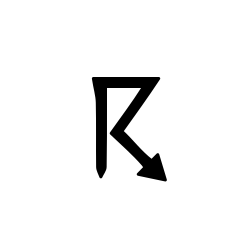
The 5th astrological house represents creativity and self-expression. In the context of climate change, the 5th house reminds us to harness our creative energy to inspire positive change. It encourages us to use art, music, and innovative ideas to raise awareness and advocate for sustainable practices.
Dos
- — Avoid strenuous activity.
- — Rest.
- — Provide shade.
Do Nots
- — Ignore evacuation orders.
- — Ignore signs of stress.
- — Use outdoor lighting with open flames.
If you need a respite from your inner weather
Choose a card.
Remember, dear friends, that we are interconnected with the planet we call home. By nurturing our environment, embracing sustainable practices, advocating for change, both on a personal and political level, we can collectively steer our world towards a brighter and greener future. Find out more about this project here.
Developed during the Environmental Data, Media and the Humanities-Hackathon, 31 May - 2 June 2023, Potsdam, organised by the network of digital humanities of Potsdam University in collaboration with Lukas Diestel, Maximilian Hepach, Giacomo Marinsalta, Sybille Neumeyer, Jonas Parnow, Birgit Schneider, May Ee Wong, funded by the Alexander von Humboldt Foundation. The source code is on Github.